
























































Begin with the production decision, not the dashboard
A useful smart factory programme starts by naming the decision that is currently late, uncertain or manual. A production manager may need to know why a line missed its hourly target. Maintenance may need an early view of repeated stops. Quality may need to connect a rejection with the exact machine, batch and process condition. These are different problems, even when they use data from the same PLC. Writing the decision first prevents the project from becoming a collection of charts that look impressive but do not change daily work.
- ✓Name the person who will act on each signal
- ✓Define the production or quality question in plain language
- ✓Record the current source and delay for that answer
- ✓Agree what a useful response should change on the floor
Map every machine signal and its operating context
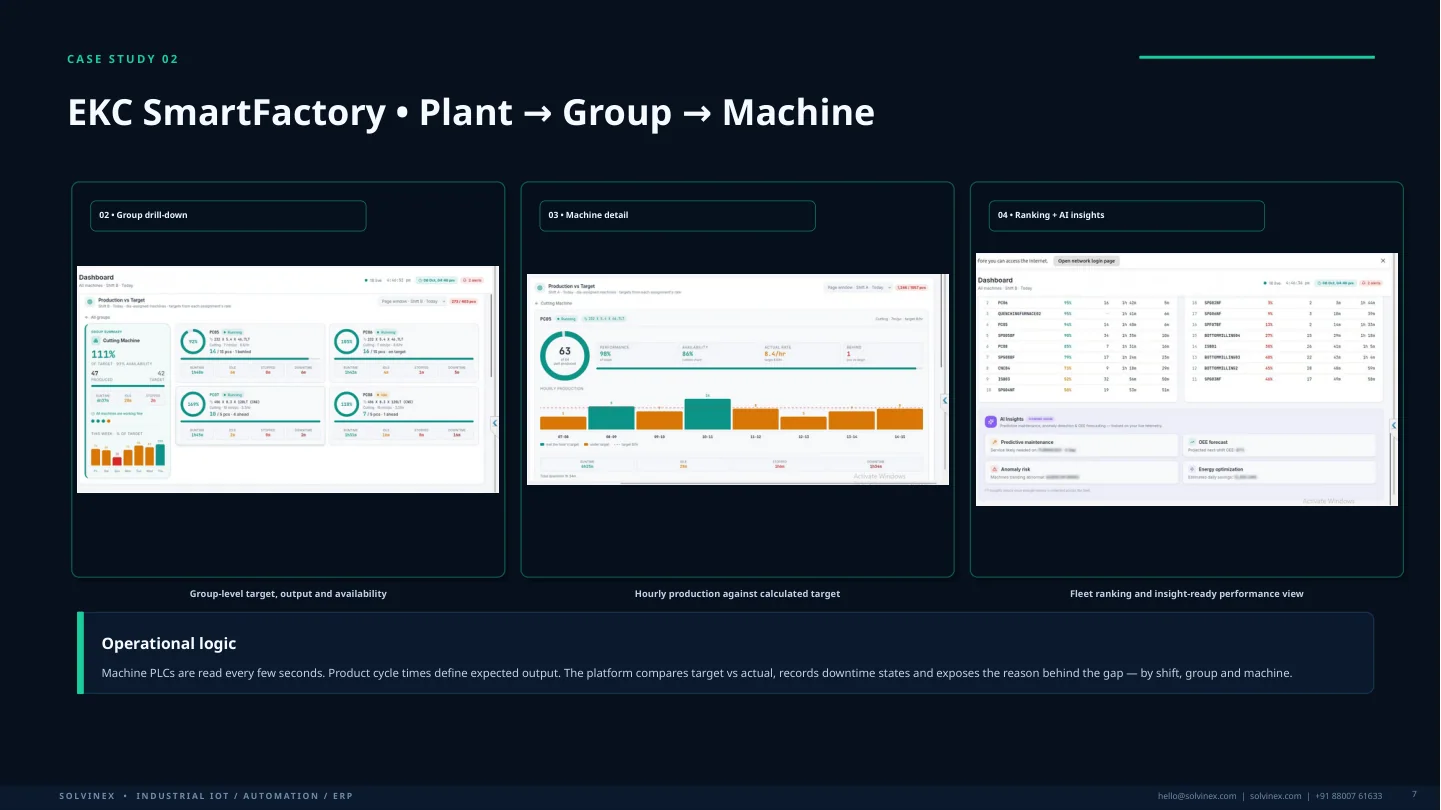
PLC tags and sensor readings only become useful when the system knows what they represent. A counter needs its machine, product, tool, cavity, shift and reset behaviour. A temperature channel needs its process stage, acceptable band and sampling interval. A stopped bit needs rules that distinguish planned downtime, changeover, no material, maintenance and signal loss. Build a small signal register before development. It becomes the shared language between controls engineers, production teams and software developers.
- ✓Document protocol, address, unit and expected value range
- ✓Keep raw readings separate from derived production states
- ✓Capture product and shift context beside machine events
- ✓Define how resets, duplicates and missing values are handled
Related: IoT Solutions·Industrial IoT & Predictive Maintenance
Design an edge layer that keeps working when the internet does not
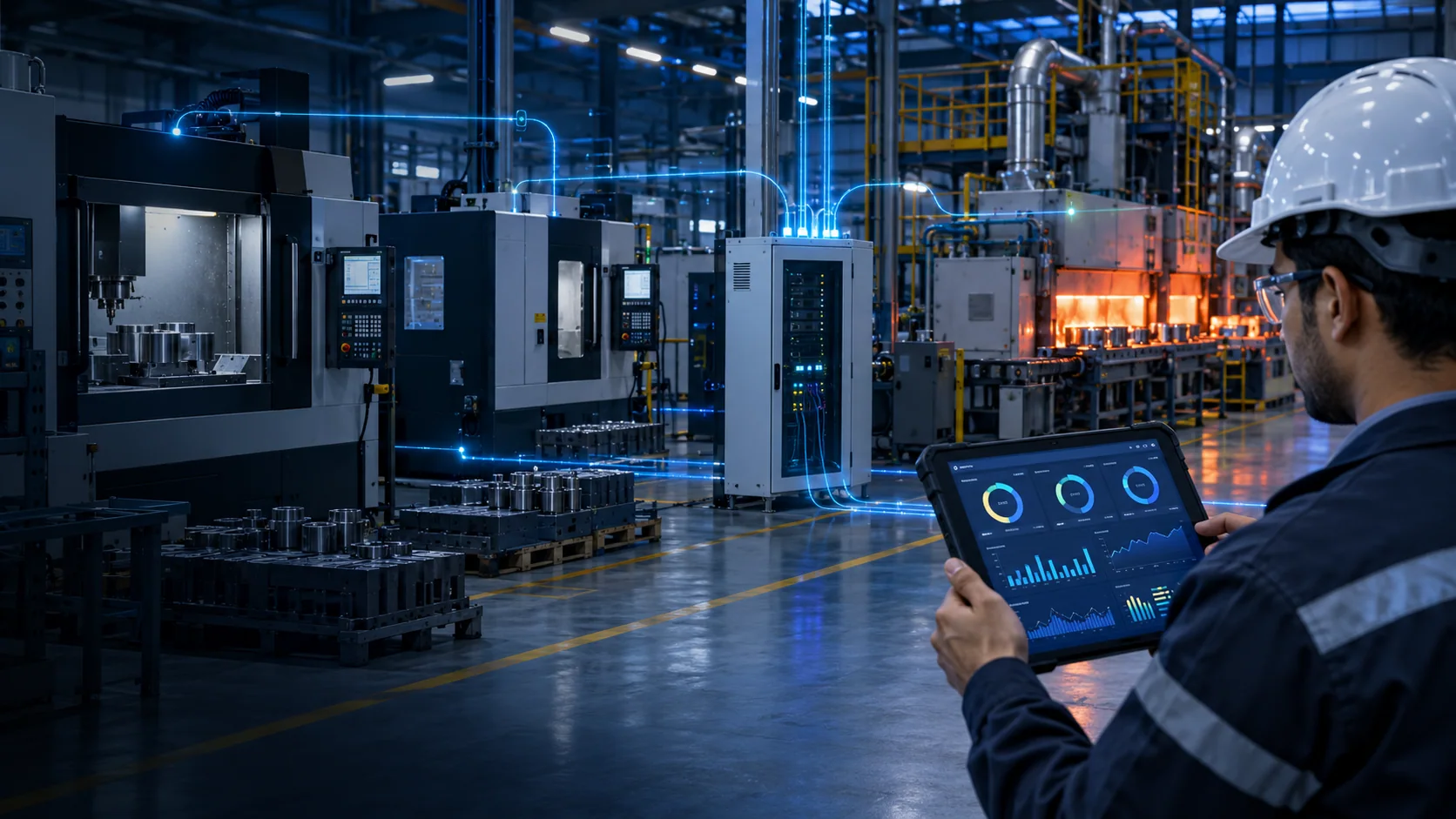
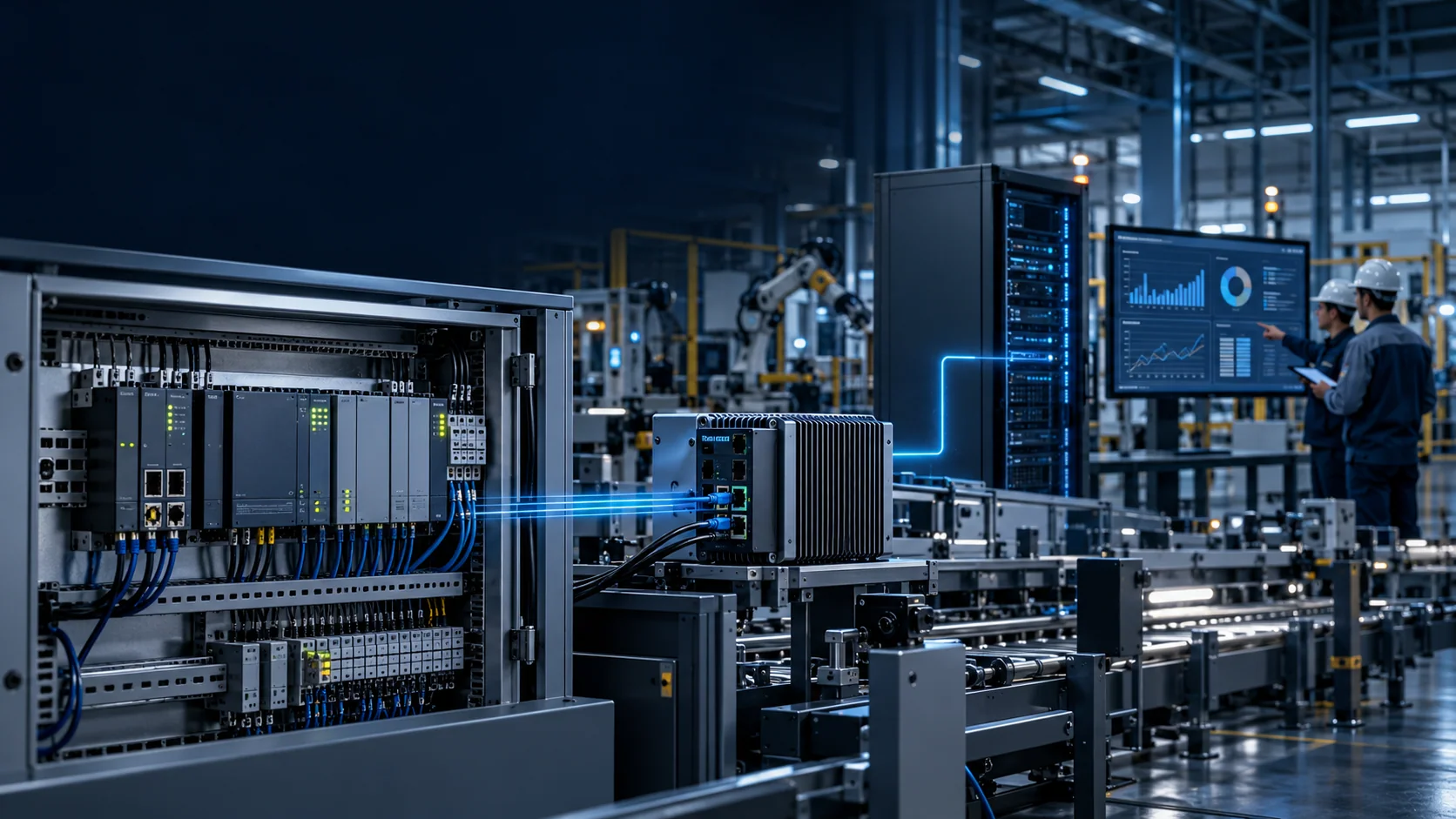
A factory should not lose its operating history because a cloud connection drops. The edge or plant-server layer can read PLCs over the local network, timestamp events, validate data and buffer records until an approved upstream connection returns. Critical control must remain within the machine and its safety system. The IoT layer observes and coordinates; it should never turn cloud availability into a production safety dependency.
- ✓Use local ingestion for low latency and continuity
- ✓Queue events with stable machine identity and timestamps
- ✓Expose gateway and device health, not only production counts
- ✓Plan recovery so buffered records do not create duplicates
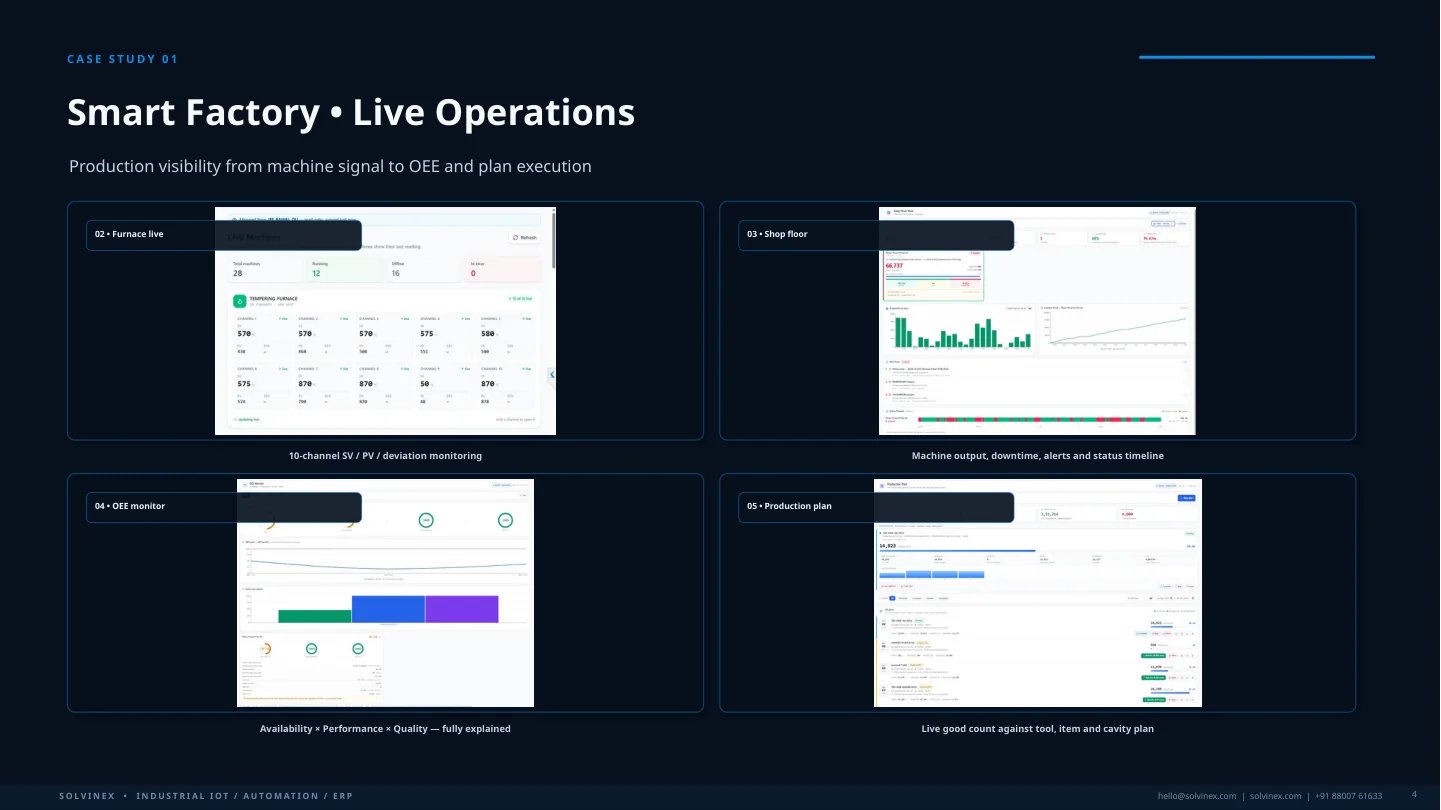
Calculate OEE transparently enough for operators to challenge it
OEE is useful only when the people running the line can explain its availability, performance and quality factors. Hidden formulas create arguments instead of improvement. Show the planned production window, excluded time, ideal cycle basis, good count, rejected count and downtime classifications behind the headline percentage. When a number looks wrong, supervisors should be able to trace it to the underlying events and correct authorised records through an audit trail.
- ✓Publish the formula and each input beside the result
- ✓Separate signal loss from genuine machine downtime
- ✓Tie ideal cycle time to the active product or tool
- ✓Keep corrections attributable and reviewable
Connect telemetry to traceability, quality and ERP workflows
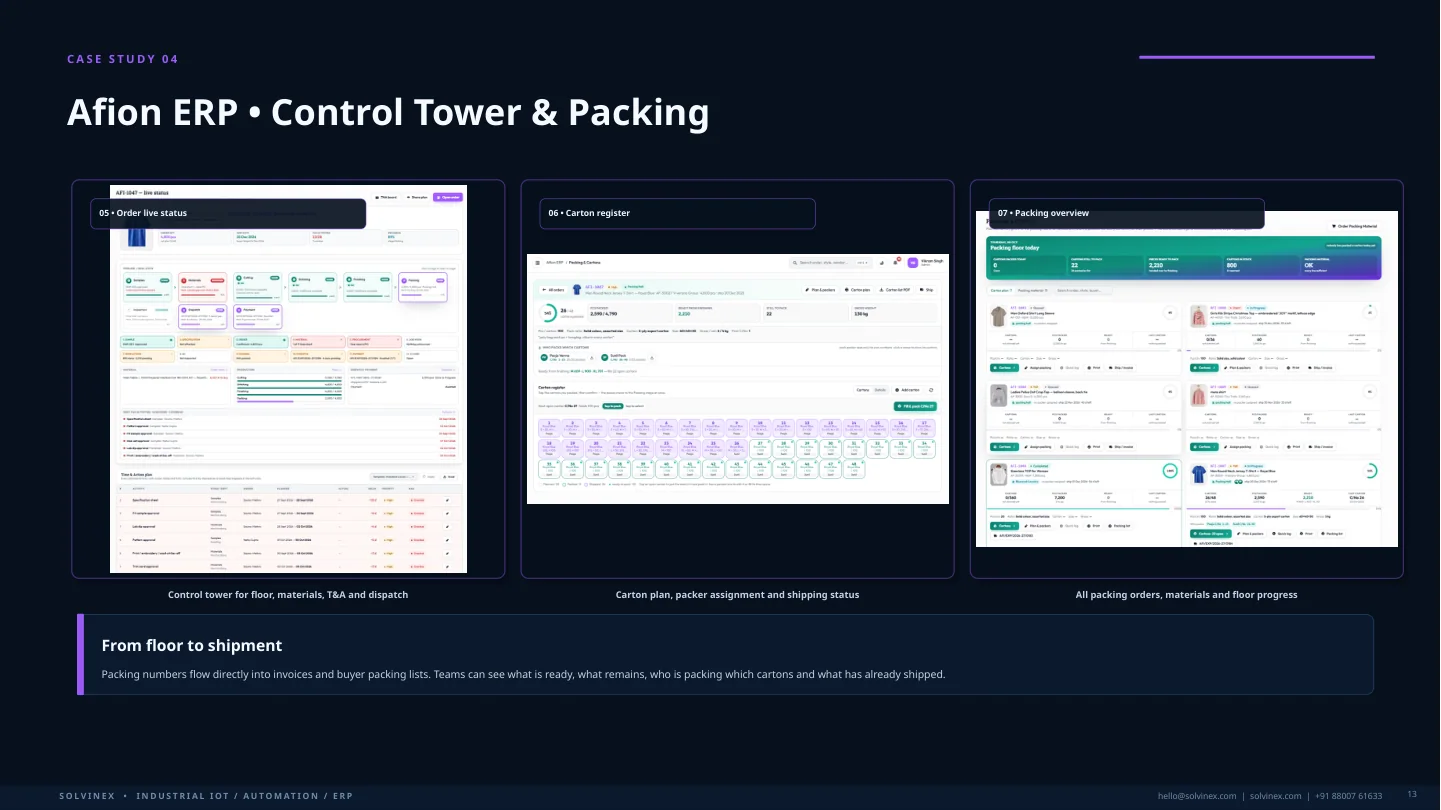
Machine monitoring creates more value when an event can travel into the workflow that needs it. A serial or batch can carry production stages and process readings into quality review. A rejection can update the quality factor and create a controlled follow-up. Completed quantities can inform planning, packing and dispatch. The integration should pass validated business events rather than exposing raw PLC traffic directly to every application. This keeps interfaces stable while allowing the plant system, ERP and reporting tools to evolve independently.
- ✓Create stable identifiers for machine, product, order, batch and serial
- ✓Define which system owns each business record
- ✓Use APIs or queued events with retry and audit behaviour
- ✓Restrict data and actions according to plant and role
Related: IoT Cloud & Device Integration·IoT Mobile Apps & Dashboards
Scale line by line with evidence from a controlled pilot
A pilot should prove the complete operational loop on a small but meaningful scope. Select machines with understood signals and a real performance problem. Verify counts against physical output, review state changes with operators and measure how quickly the team can explain a target gap. Only then extend the same patterns to another line or department. This approach reveals protocol, network and workflow differences while they are still inexpensive to correct.
- ✓Pilot one line or a small machine group
- ✓Reconcile digital counts with actual production
- ✓Track data availability and unexplained events
- ✓Document support ownership before adding more assets
Questions to settle before the first installation
These practical questions expose most hidden assumptions before hardware reaches the factory floor.
- ✓Which PLC models, protocols and network routes are approved?
- ✓Who owns cycle-time, shift, product and downtime master data?
- ✓What must continue locally during an internet or cloud outage?
- ✓How will device credentials, access rights and software updates be managed?
- ✓Which ERP, SAP or maintenance workflows should receive validated events?
- ✓Who reviews alerts and how is the action recorded?
A smart factory is an operating system, not a screen
The strongest industrial IoT systems join trustworthy machine signals with clear production definitions and owned human workflows. PLC connectivity is the beginning. Value appears when the plant can explain what happened, who needs to act and how the event connects to quality, planning, maintenance or dispatch. Build the data path in layers, keep calculations visible and let field evidence decide where to scale next.
Go Deeper
Solvinex services for this topic
IoT Solutions
Connected products spanning hardware, firmware, cloud and useful applications.
View service →Industrial IoT & Predictive Maintenance
Monitor asset condition and turn machine data into practical maintenance actions.
View service →IoT Cloud & Device Integration
Connect device fleets, telemetry and business systems securely.
View service →IoT Mobile Apps & Dashboards
Make connected devices easy to monitor and operate from mobile or web.
View service →Comments
Share your thoughts or questions on this article.
No comments yet. Be the first to comment.