


























































Start with the machine that keeps everyone awake
The best predictive maintenance pilot rarely begins with a factory wide technology plan. It begins with a machine that causes a real operational headache. Perhaps a pump fails without warning, a motor overheats during a busy shift, or a gearbox develops a vibration that an experienced technician can hear but cannot measure consistently. That machine gives the pilot a clear reason to exist. The team already understands the consequence of failure, maintenance history is easier to find, and operators have useful context that no algorithm can invent. A useful first conversation is not about cloud platforms or artificial intelligence. It is about the asset, the known failure modes, the current inspection routine and the decision someone would make if an early warning arrived tomorrow.
- ✓Choose one to five assets with a costly or disruptive failure history
- ✓Write down the failure modes that the team genuinely wants to detect
- ✓Name the person who will review an alert and decide what happens next
- ✓Record the current inspection effort so the pilot has an honest baseline
Match each sensor to a failure mode
A sensor is useful only when its signal can reveal the problem you care about. Vibration can expose imbalance, looseness and bearing behaviour. Temperature can show friction, cooling problems or an overloaded component. Current can reveal changes in motor load. Pressure and flow can help a team understand pump performance, blocked filters and process instability. The mistake is to install every available sensor and hope that more data will create more certainty. It usually creates more noise. Begin with a simple failure mode table. For each likely fault, note the physical change that happens first, the sensor that could observe it, the required sampling rate and the operating context needed to interpret it. A temperature reading during full production means something different from the same reading while a machine is idle.
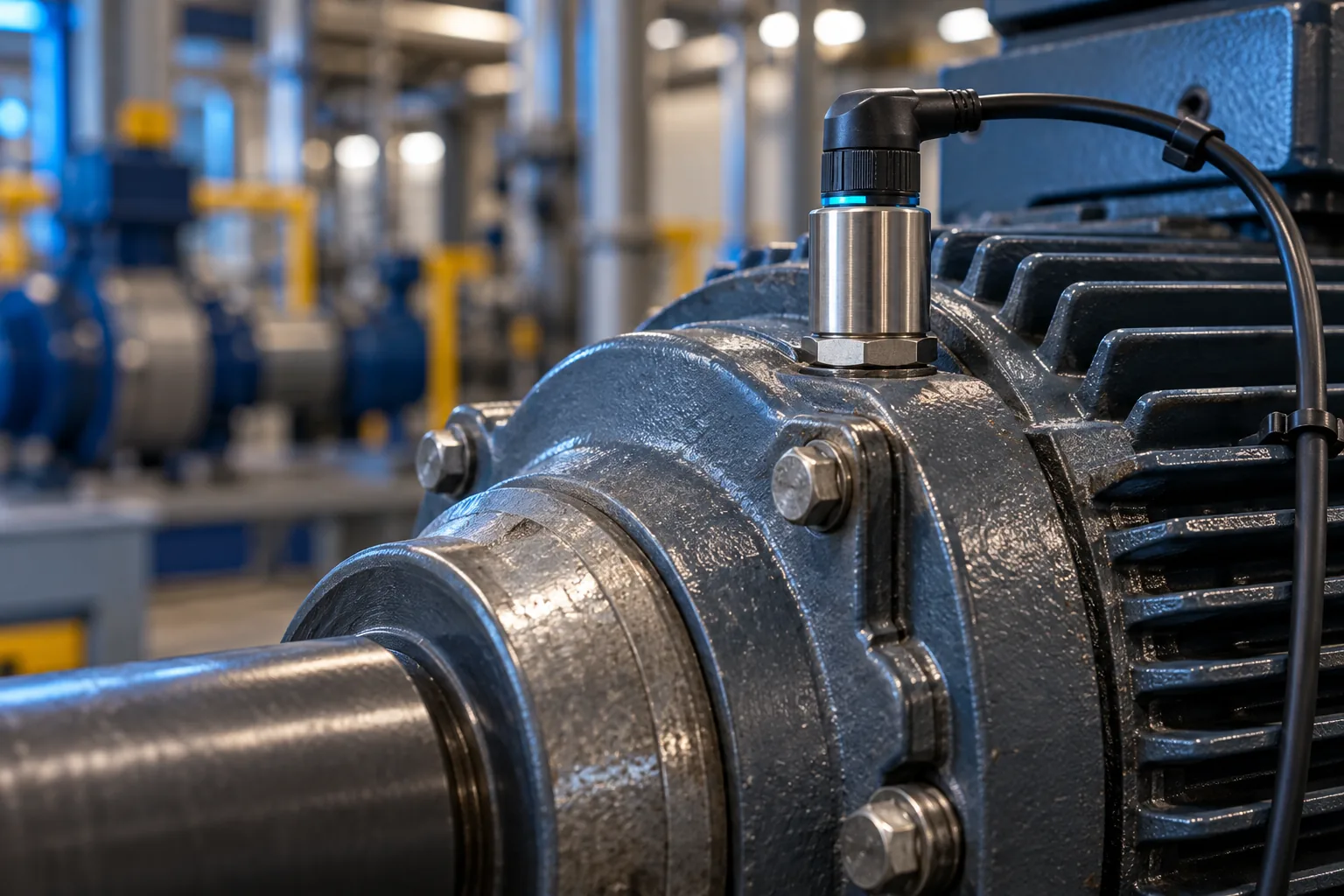
- ✓Use vibration for rotating components such as motors, pumps, fans and gearboxes
- ✓Use temperature when heat is a meaningful symptom rather than a normal process condition
- ✓Use current or power when changing load can reveal mechanical or electrical stress
- ✓Capture machine state, speed and production context alongside the sensor reading
Build a data path that survives the factory floor
A polished dashboard cannot rescue an unreliable data path. Industrial environments contain electrical noise, metal obstructions, patchy connectivity and machines that cannot be stopped whenever a technician wants to adjust a device. The pilot therefore needs a practical route from sensor to decision. That may involve wired sensors connected to a local gateway, battery powered devices using a suitable wireless network, or existing PLC data combined with new condition sensors. The edge gateway should buffer readings when the internet is unavailable, apply basic validation and send data securely when connectivity returns. The system also needs timestamps, asset identity and a clear way to recognise missing data. A flat line can indicate a stable machine, a disconnected sensor or a dead battery. The architecture must tell the difference.

- ✓Confirm power, enclosure, mounting and network conditions before selecting hardware
- ✓Buffer readings locally so a short network outage does not create a blind spot
- ✓Give every sensor and asset a stable identity that remains useful as the pilot grows
- ✓Plan device health checks, battery status and secure remote updates from the beginning
Earn trust before trying to predict failure
Most plants do not have a neat library of labelled failures ready for a machine learning model. That is normal. A strong pilot can begin with condition monitoring and anomaly detection. The team first learns what healthy operation looks like across shifts, speeds, recipes and loads. Engineers then review unusual patterns and connect them with inspections or maintenance records. This stage is valuable because it exposes bad sensor placement, loose thresholds and missing operating context before the system begins making stronger claims. It also gives technicians a voice in the design. When an alert reflects something they recognise on the machine, trust grows. When a dashboard repeatedly cries wolf, it becomes another screen that nobody checks.
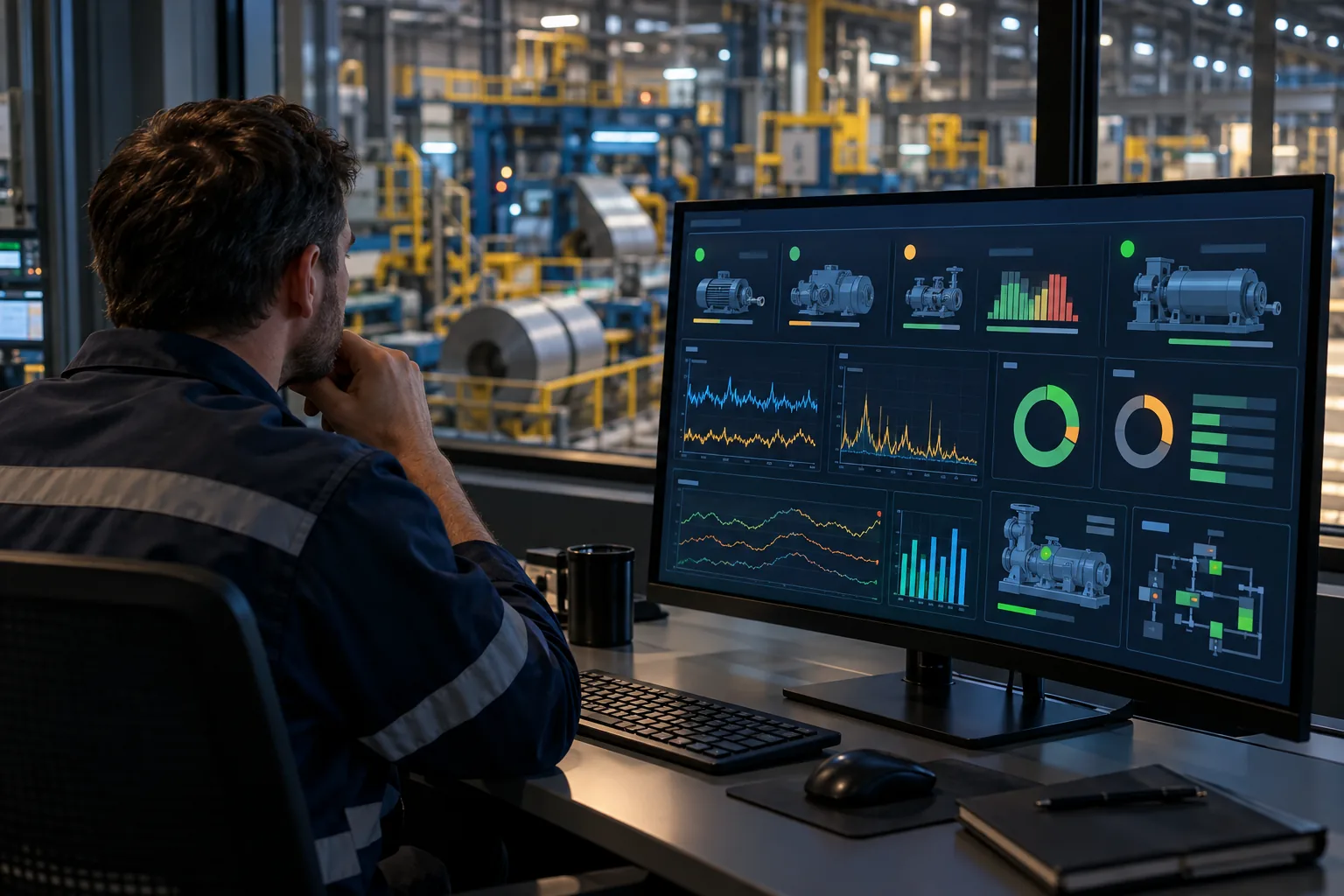
- ✓Collect a healthy baseline across more than one operating condition
- ✓Review anomalies with the people who know how the equipment behaves
- ✓Separate advisory alerts from urgent alarms so every signal does not feel critical
- ✓Track false alarms and missed events as seriously as dashboard uptime
Turn an alert into a maintenance decision
The real product is not the sensor reading. It is the decision that follows. Every alert should answer four questions: which asset needs attention, what changed, how confident is the signal and what should the team inspect next. The workflow may create a task in a maintenance system, notify a reliability engineer, or add an asset to the next planned inspection round. It should not bypass experienced judgement. The technician needs recent trends, operating conditions and relevant maintenance history in one place. After inspection, the finding should return to the system. That feedback shows whether the alert was useful and gradually improves thresholds, rules and models. Without this loop, predictive maintenance becomes a one way stream of notifications rather than a learning maintenance process.

- ✓Send alerts to an owned workflow rather than a shared inbox that nobody monitors
- ✓Show the trend and operating context that led to the alert
- ✓Capture the inspection result, action taken and component condition
- ✓Review alert quality with maintenance and operations at a regular cadence
Measure the pilot in maintenance language
Model accuracy can be interesting, but it is not the result a plant manager buys. The pilot should be judged by operational evidence. Did the system provide useful warning before an issue became disruptive? Did it reduce manual inspection time on the selected assets? Did the team find a developing fault that would otherwise have remained hidden? Did alerts lead to planned work instead of emergency work? Some pilots finish without preventing a dramatic failure, especially when the trial is short. That does not automatically mean the idea failed. A good review separates technical reliability, alert usefulness and business value. It may reveal that the system works but the chosen asset was not important enough, or that the sensor is useful but the maintenance workflow needs attention.
- ✓Data availability: whether trustworthy readings arrived when the machine operated
- ✓Actionable alerts: signals that led to a meaningful inspection or maintenance decision
- ✓Warning time: how much useful notice the team received before intervention
- ✓Maintenance effort: time spent reviewing data compared with the previous routine
- ✓Avoided impact: downtime, scrap, overtime or secondary damage reasonably prevented
A sensible twelve week pilot plan
Twelve weeks is often enough to test the complete loop without pretending that every failure can be predicted in one quarter. During the first two weeks, select assets, agree on failure modes and inspect the installation environment. The next two weeks cover hardware installation, device identity, connectivity and secure data flow. Weeks five and six establish baseline behaviour and confirm that readings make sense beside the machine. During weeks seven to ten, the team tunes alerts, records inspections and connects the notification flow to real maintenance work. The final two weeks are for evidence, not theatre. Review what the system detected, what people acted on, where data disappeared and what must change before scaling. The output should be a decision document with costs, limitations and a clear recommendation.
- ✓Weeks one and two: asset selection, failure mode review and site survey
- ✓Weeks three and four: installation, connectivity, security and device checks
- ✓Weeks five and six: baseline collection and data validation
- ✓Weeks seven to ten: alert tuning, inspections and workflow feedback
- ✓Weeks eleven and twelve: evidence review and scale decision
Questions manufacturers ask before starting
These are the questions that usually surface once a maintenance team moves from interest to a real pilot.
- ✓Do we need artificial intelligence immediately? No. Reliable sensing, useful context and a trusted response workflow matter first. Anomaly detection and engineering rules can create value while better training data develops.
- ✓Can older machines be monitored? Often yes. External sensors and edge gateways can add visibility without replacing the machine controller, although the installation must respect safety, warranty and site rules.
- ✓How many machines should a pilot include? A small group is usually easier to learn from. Choose enough assets to compare behaviour, but not so many that installation and alert review become unmanageable.
- ✓What happens when the internet fails? A suitable edge device should buffer readings and forward them later. Critical local safety control must never depend on a cloud connection.
- ✓When should we scale? Scale when data is dependable, alerts influence real maintenance decisions and the team can explain the value of adding the next group of assets.
The best pilot leaves the team with a better decision
Predictive maintenance succeeds when sensing, engineering judgement and daily maintenance work reinforce one another. The technology should help people notice change earlier, understand what deserves attention and plan work with more confidence. A pilot that produces attractive charts but no trusted action has not finished the job. Start with a painful asset, observe the right physical signal, build a resilient data path and involve the people who maintain the machine. Then measure whether the system improved a decision. That approach may look less dramatic than promising an intelligent factory overnight, but it creates the evidence needed to invest wisely and scale without carrying a weak foundation into every production line.
Comments
Share your thoughts or questions on this article.
No comments yet. Be the first to comment.